Retiring the household group chat: one calm place for everyone under one roof, and the landlord down the hall
roomkind turns the chores, bills, bookings and repair threads lost in household group chats into one shared hub, with a separate side for landlords.
 roomkind · Internal product
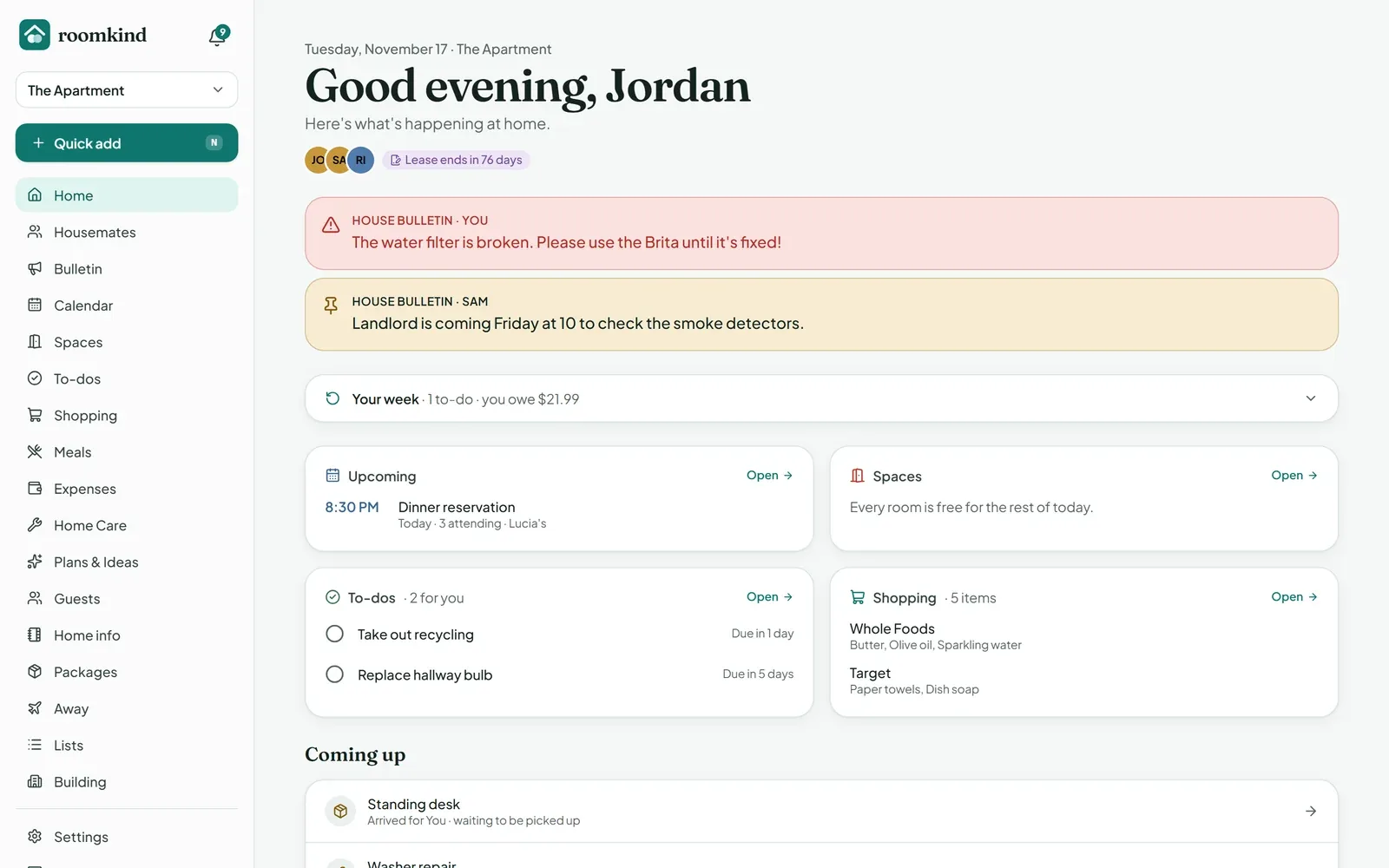
Every shared home runs on a group chat, and every group chat eventually fails at the same jobs. Whose turn is it to take out the recycling? Who owes who for the electric bill? Is anyone using the spare room this weekend? When is the plumber coming? The answers exist, two hundred messages up. Landlords have the same problem multiplied: thirty separate text threads, a repair request in each one, and no single view of what needs attention today.
At a glance
| Client | Our own product |
| Industry | Shared living (roommates, couples, families, short-term rentals) and small-to-mid landlords |
| What we built | A web app for households (chores, groceries, shared costs, bookings, repairs, house info) and a separate landlord side (properties, repairs, announcements, leasing, reports) |
| Where AI fits | Claude reads receipts, turns pasted text into structured entries ("quick add"), and powers a landlord assistant that proposes actions and changes nothing until the landlord confirms |
| Stack | Next.js on Vercel. Supabase for the database, auth, storage, realtime and scheduled jobs, with row-level security on every table |
| Status | Live at roomkind.co |
The old way
In a household:
- Chores are agreed once in the chat, then forgotten and argued about.
- Someone pays the bill, posts a screenshot, and three people do arithmetic.
- Guests, room bookings and who's away live in people's heads.
- The Wi-Fi password, the house rules and the landlord's number get asked for again every month.
For a landlord:
- Each tenant texts separately about repairs, keys and lease questions.
- Building-wide notices go out one message at a time.
- Lease end dates and open repairs sit in a spreadsheet, if they're tracked at all.
What we built
roomkind replaces the coordination part of the group chat with structured places, and gives the chat back to conversation.
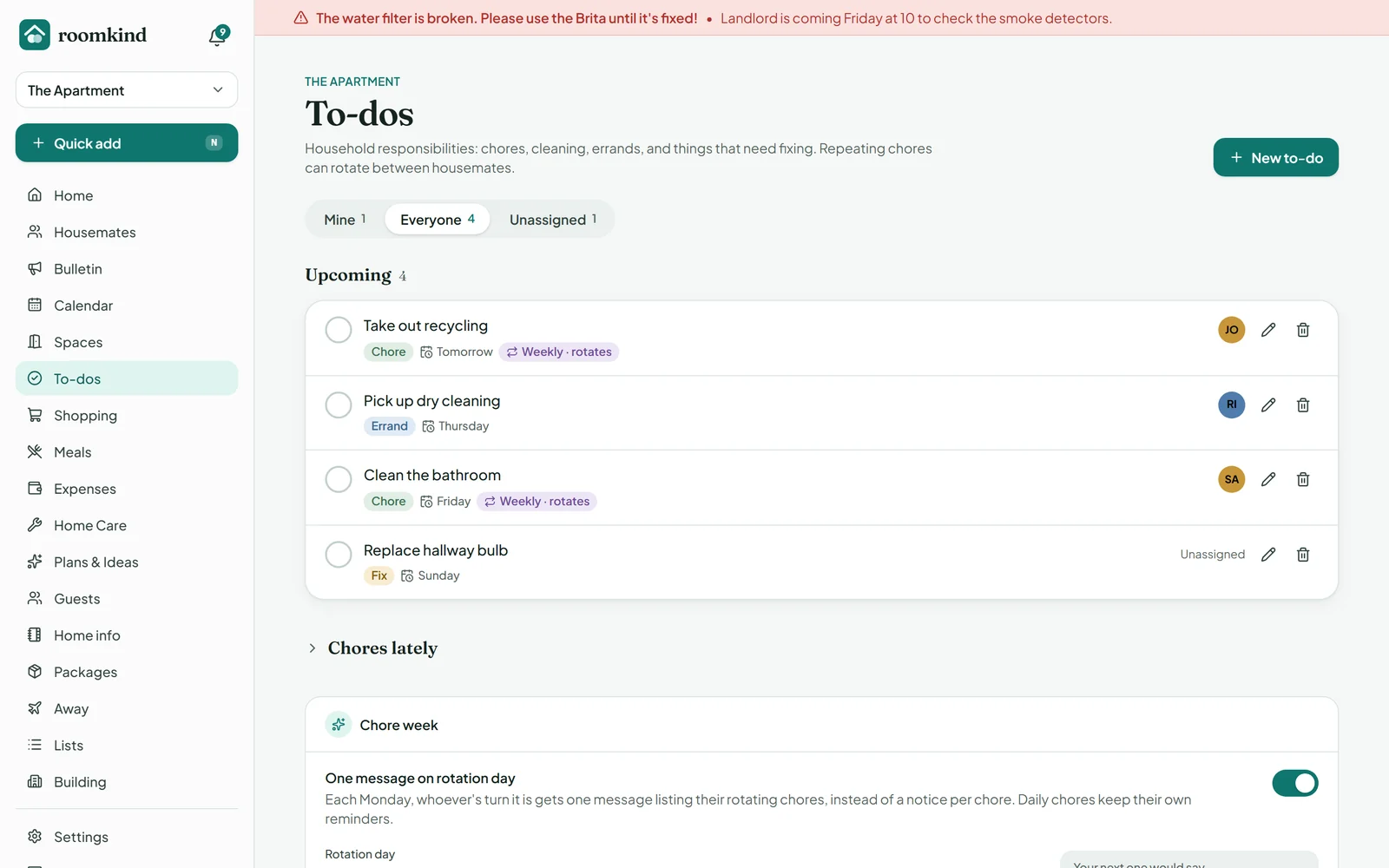
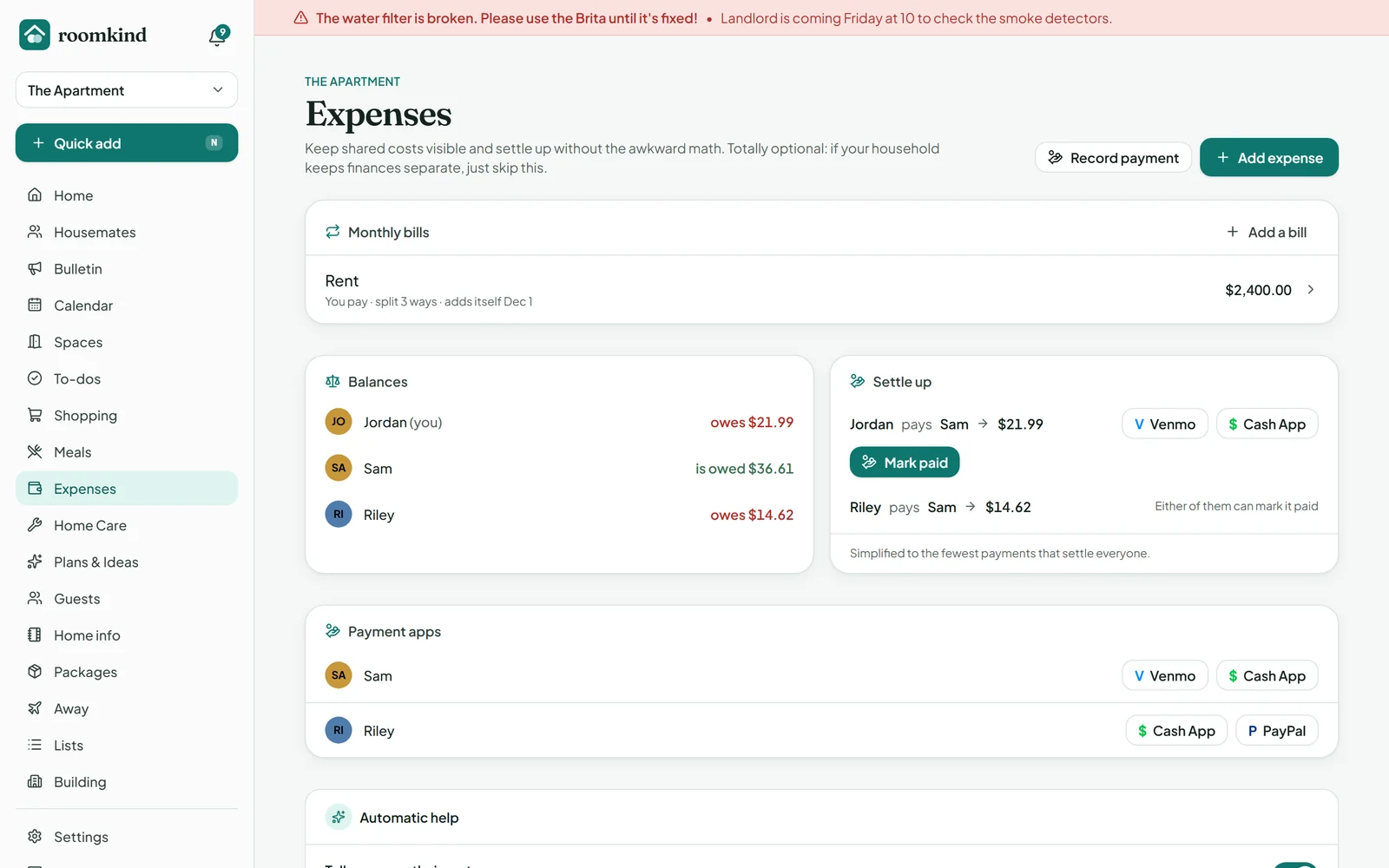
- Households get rotating chores, a shopping list grouped by store, shared expenses that net down to the fewest payments, a shared calendar for guests, bookings and repairs, pinned bulletins, and a Home info page for codes, logins, agreements and dates. Each home turns on only the sections it uses.
- Landlords get a separate side: properties and units, one inbox for repair requests and messages, announcements to a unit, a building or everyone, leasing and lease end dates, reports, and a Today page listing what needs attention across every unit.
- A firm privacy line between the two. Landlords see names, contacts and lease dates. Chores, expenses, chats and housemate profiles stay with the household. That line is what makes it reasonable for a landlord to invite residents.
How the workflow changes
| Step | Before | With roomkind |
|---|---|---|
| Chores | Agreed in chat, then disputed | Assigned and rotated automatically each week, with one reminder on rotation day |
| Shared bills | A screenshot and mental arithmetic | Logged once, split, and settled in the fewest payments through the payment apps people already use |
| Getting things into the app | Typing every item by hand | Paste a message or snap a receipt; AI turns it into structured entries for you to confirm |
| Finding house info | "What's the Wi-Fi again?" | A Home info page and pinned bulletins that don't scroll away |
| Landlord announcements | Thirty individual texts | One announcement to a unit, a building or everyone |
| Landlord's day | Scrolling through threads | A Today page: leases ending, applications waiting, open repairs |
| Onboarding a building | Collecting phone numbers | Type units as a range ("101-130") and invite by code, link or a printed QR poster per unit |
Inside the build
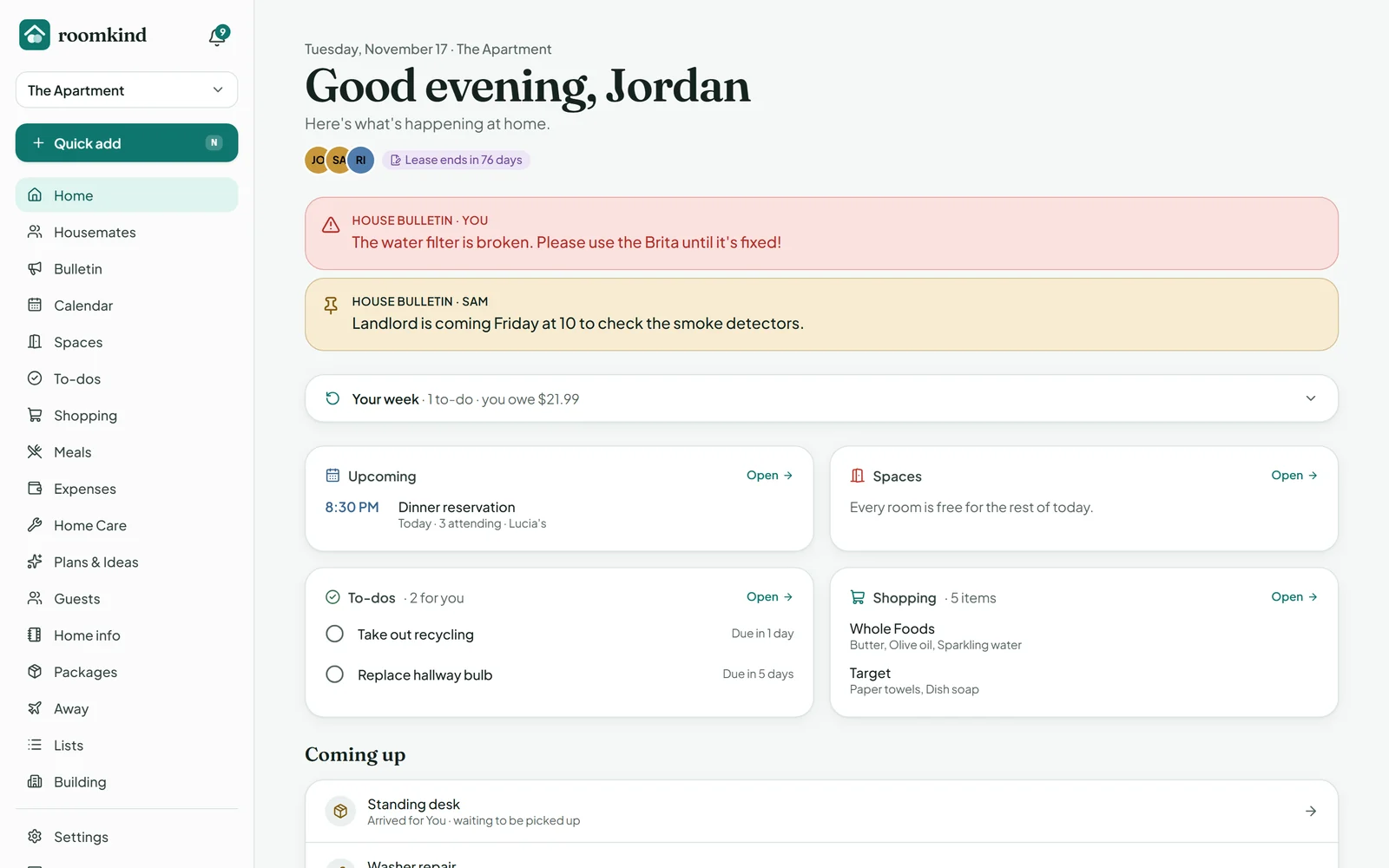
All screenshots use roomkind's demo data: made-up residents, a made-up landlord and fictional addresses.
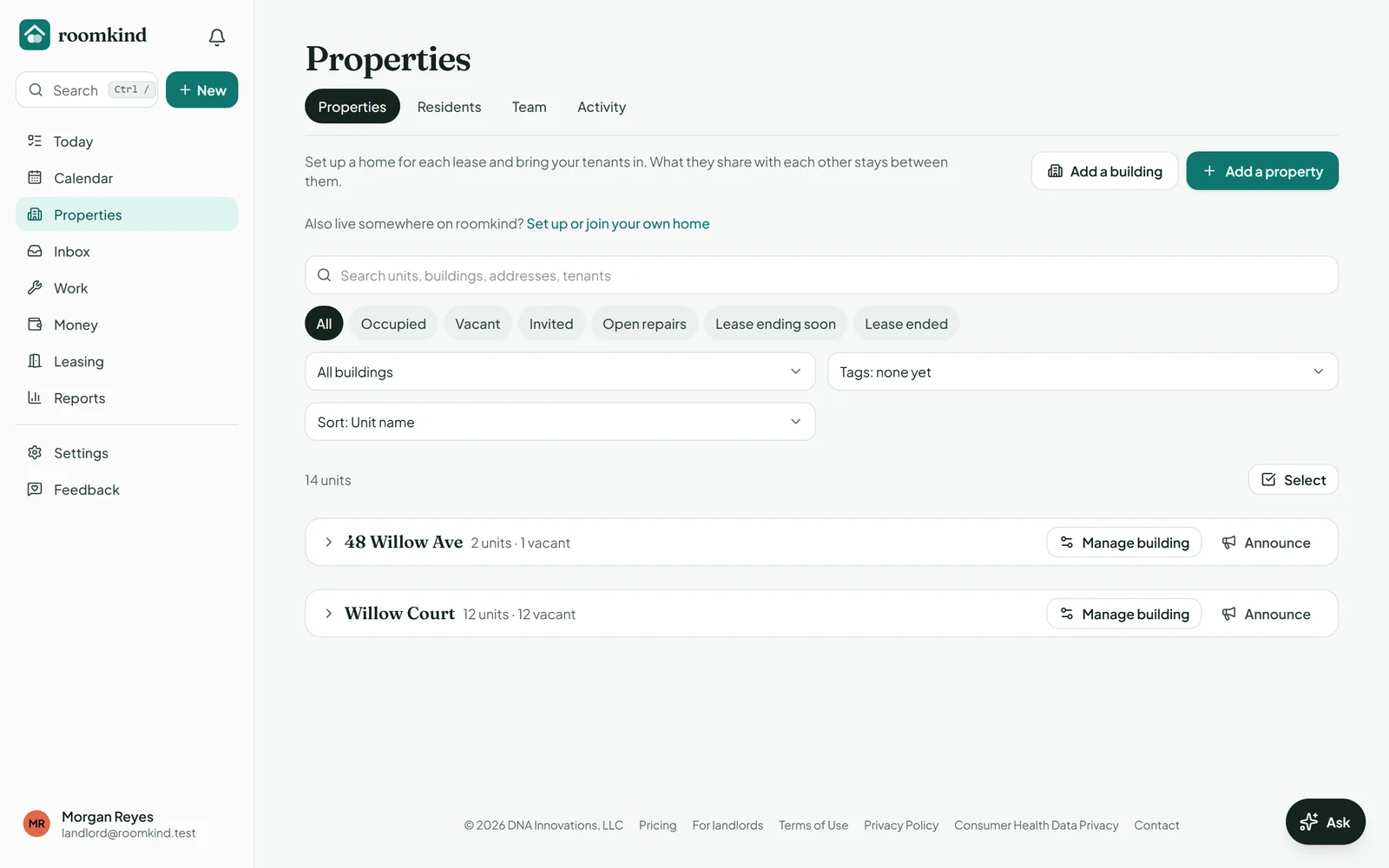
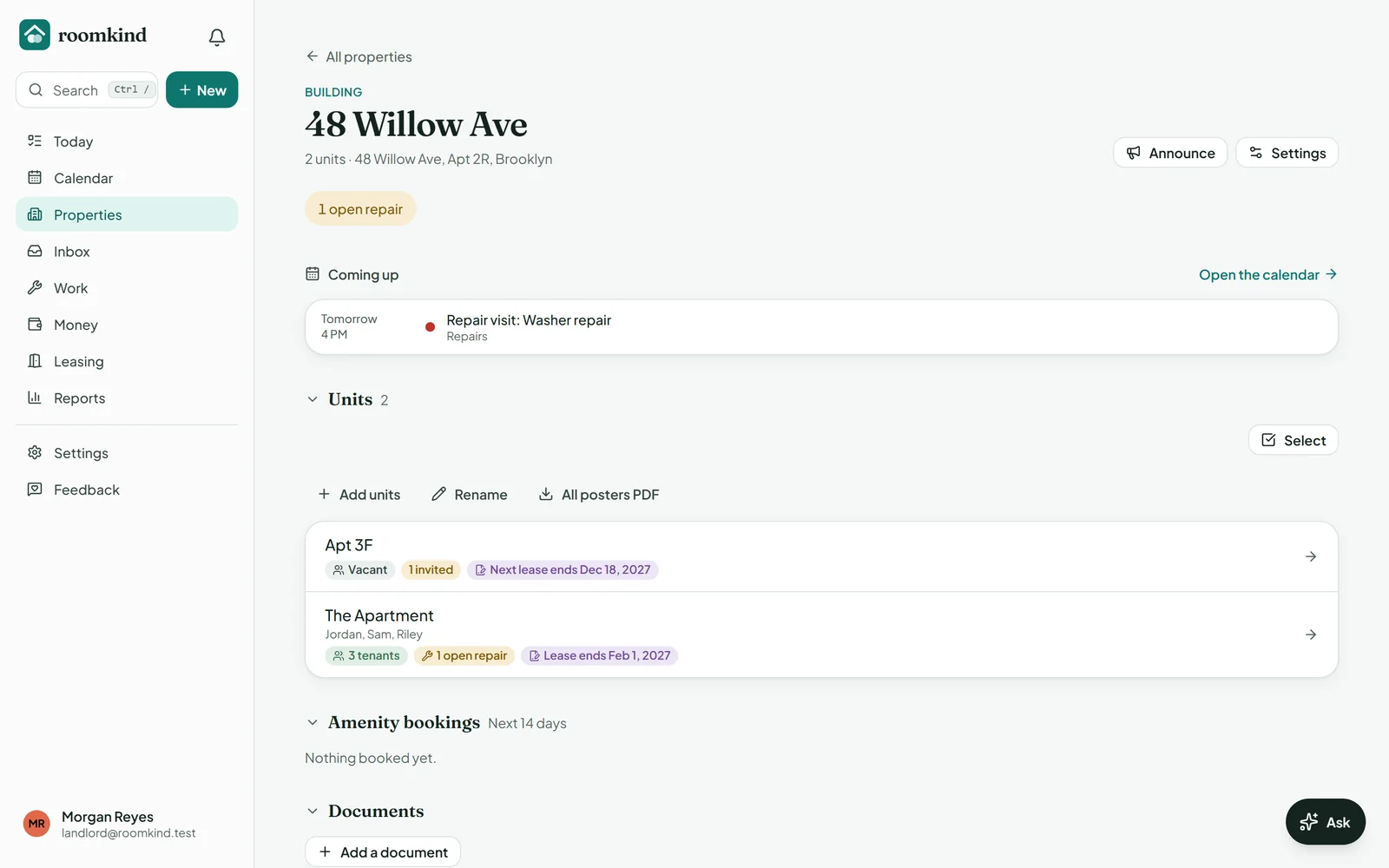
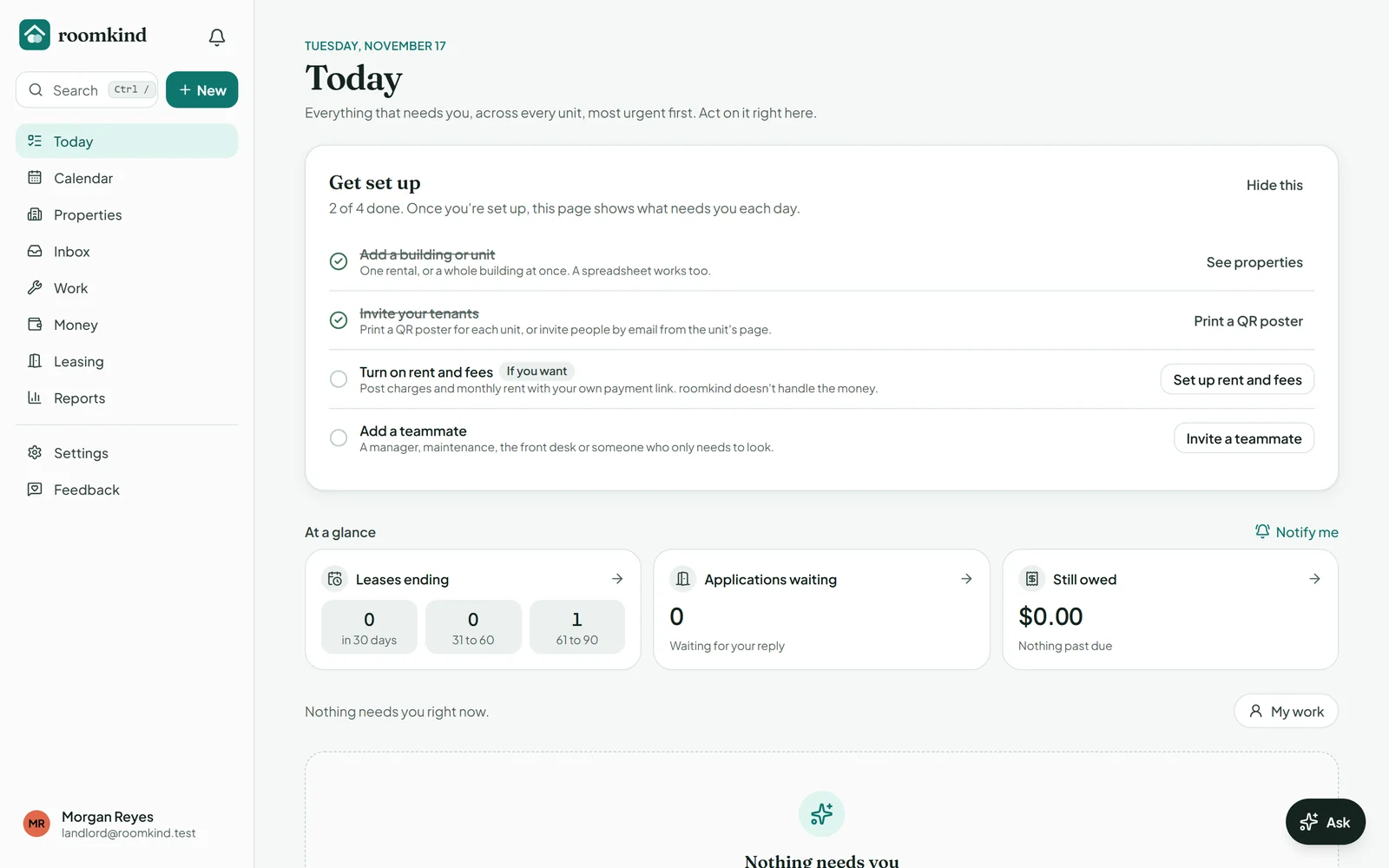
Under the hood
- Row-level security on every table. Who can see what is enforced by the database itself, not just by the app's screens, and the household/landlord privacy line is part of that.
- AI that proposes, people who confirm. Receipt reading and quick add produce entries a person confirms. The landlord assistant drafts a plan and changes nothing until the landlord approves it.
- Encrypted storage for sensitive house info, such as door codes and logins.
- Built to sit beside existing tools. Landlords can import from other property software, and roomkind doesn't need to replace their accounting or payment setup.
- Fast iteration with discipline. roomkind went from first commit to live in a few weeks, with automated tests and database policy tests running throughout.
By the numbers
roomkind is live at roomkind.co as a web app, with iOS and Android apps built from the same code. It went from first commit to live in under three weeks, and has more than 270 commits as of November 2026. roomkind doesn't collect or process rent: optional rent tracking uses the landlord's own payment link, and housemates settle up in the payment apps they already use.
Example scenario
Example scenario (illustrative): A landlord with two small buildings and twenty-six units spends evenings answering texts about leaks, keys and parking. They add both buildings to roomkind, print a QR poster for each unit's door, and post one announcement about a water shutoff to the whole building. Repair requests now arrive in one inbox with the unit attached, and the Today page shows which leases end next month. Tenants who share a unit also use the household side for chores and bills, and that part stays private to them.
What this means for your business
roomkind shows how quickly a focused team can take a messy, chat-based workflow and give it structure, with AI handling the data entry nobody wants to do. The same approach fits:
- Property managers and landlords who coordinate residents over text and email.
- Co-living, student housing and short-term rental operators with shared spaces and rotating guests.
- Any service business run out of group chats, such as field crews, clubs or small offices, where requests and money get lost in scrollback.
Second Voyage builds AI systems that are held to a standard you can check. Talk to us about yours.